What Should HVAC Designers and Contractors Know About the EU Taxonomy?

The EU’s climate and sustainability policies are also reshaping the building services engineering landscape. The EU Taxonomy is a classification system that defines the criteria for sustainable activities and guides investors towards funding environmentally sustainable projects. This directly impacts which projects receive financing and under what terms and, in turn, the solutions that HVAC designers and contractors will actually implement.

Why Does This Matter to You?

  • Financing and bidding competition: Builders may receive more favorable financing if the project meets taxonomy requirements. This can also influence the conditions and requirements in bidding competitions.

  • Materials and Equipment: Designers and contractors play a key role in selecting products with provably lower environmental impacts. Verification tools include, for example, Environmental Product Declarations (EPDs), which provide reliable, comprehensive summaries of a product’s life-cycle assessment.

  • Reporting Obligations: More and more clients require that project environmental data be reported according to the taxonomy – this also applies to HVAC systems and their energy performance.

The Six Environmental Objectives of the EU Taxonomy

To be considered taxonomy-aligned, a construction project must contribute to at least one of the following objectives:

  1. Climate change mitigation – improving energy efficiency, low-emission solutions
  2. Climate change adaptation – systems that withstand extreme weather conditions
  3. Sustainable use and protection of water and marine resources – optimizing water consumption
  4. Transition to a circular economy – using materials that can be dismantled and recycled
  5. Pollution prevention and control – low-emission refrigerants and materials
  6. Protection and restoration of biodiversity and ecosystems – construction that does not harm ecosystems

Taxonomy compliance is assessed by determining whether the project makes a substantial contribution to at least one environmental objective, does not cause significant harm to any of the others, and meets minimum social safeguards.

In short: The taxonomy helps win bidding competitions, secure financing, and promote sustainable construction

Taxonomy compliance is not just paperwork – it can influence design solutions, equipment choices, and even construction methods. By addressing these requirements early in the design phase, you can deliver more competitive outcomes that meet future financing and reporting demands.
News

Top-quality indoor climate through smart choices – insights from Engineering Company Lappialämpö

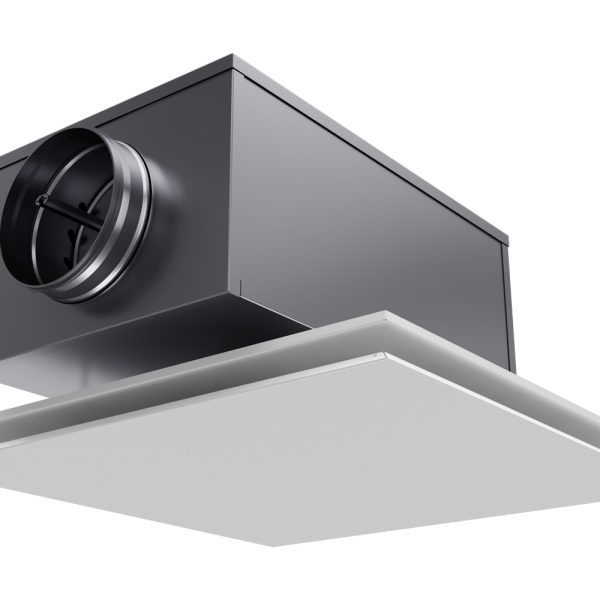
According to Tero Lehtola, CEO of company Lappialämpö, the quality of the indoor climate can be influenced surprisingly much just by the choice of diffusers. At Lappialämpö’s projects, the combination of HRV units, duct coils, and our RINO and LINE diffusers forms an effective system that ensures an even, draft-free indoor climate—just as it should be in comfortable and functional spaces. Lappialämpö Oy is a reliable full-service building services engineering company in the Lapland region, with a particular strength in high-quality, comprehensive HVAC design.

Read more

Get to know: Sales Manager Veli-Matti Piispanen

A favorite among customers, Veli-Matti knows snow and rain covers, roof hoods, and hoods like the back of his hand. Veli-Matti, or Velsu as he’s known to friends, has been working at Climecon since 1999. In addition to his sales role, he also helps manage products for snow and rain covers, and roof hoods together with the Product Manager. His enthusiasm for his work is as strong as it was at the start of his career, and as a thrill-seeker, Velsu is always ready for new adventures.

Read more

Manage life cycle costs effectively – energy-saving smart ventilation

The costs of a construction project do not end when the building site is completed. The real expenses accumulate over the entire lifecycle of the building: from energy use, maintenance, and the lifespan of the systems. When new systems are put out to tender, the purchase price alone does not reveal the total cost of the investment. The Life Cycle Costs show which solution is truly sensible both economically and environmentally. When solutions are designed to be long-lasting and energy-efficient, the building consumes less energy, emissions decrease, and indoor air quality remains high year after year.

Read more