Direct emissions reduced to zero
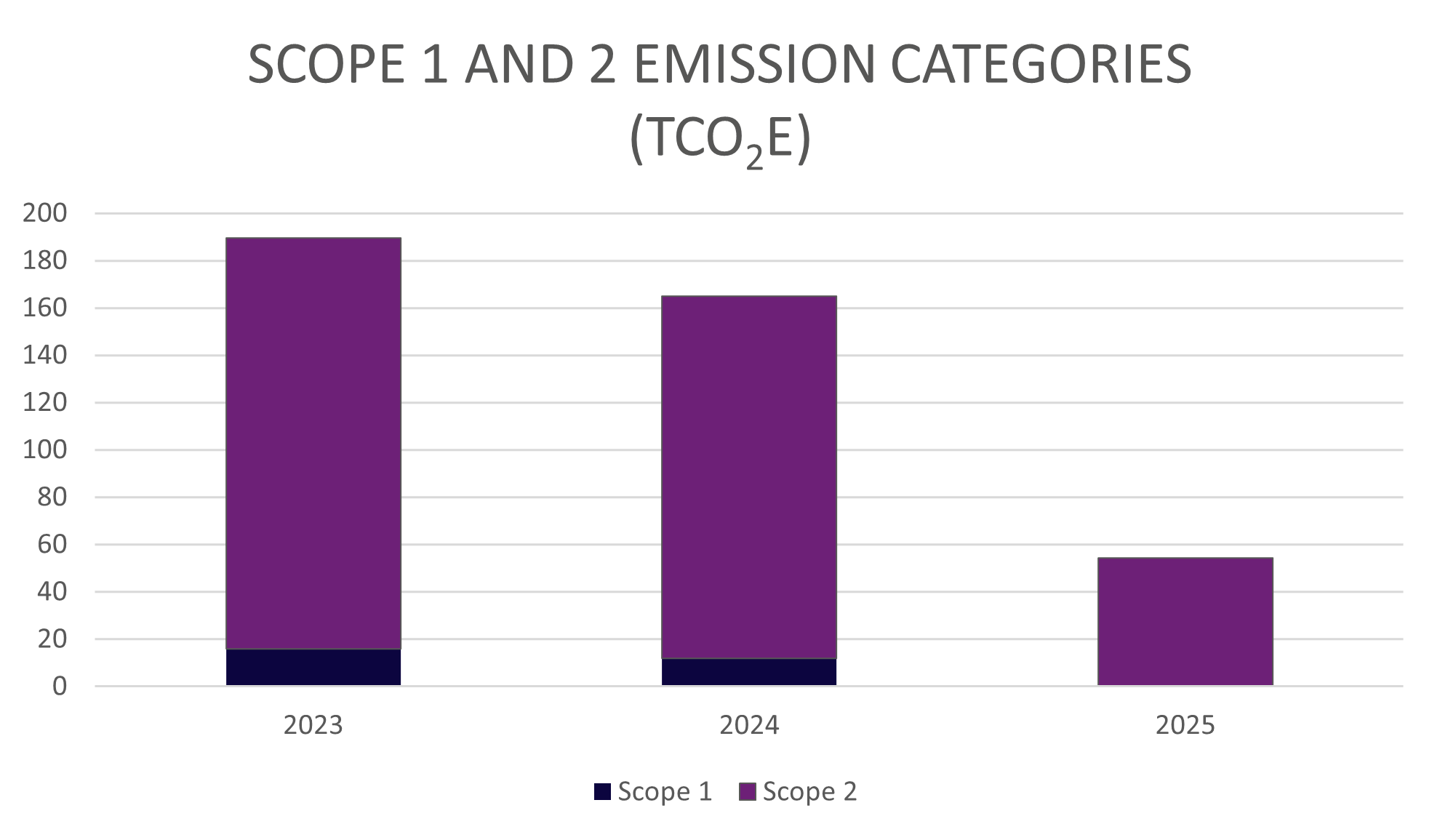
In 2025, Climecon reached a major milestone: direct emissions were reduced to zero. Scope 1 emissions are those generated directly from a company’s own operations, such as production and property energy use.
As recently as 2024, direct emissions totaled 12.0 tCO₂e, arising from the use of light fuel oil in production. Moving to more modern facilities enabled the phase-out of fossil fuels and the elimination of direct climate impact from our operations.
“This is a concrete example of how the right decisions create lasting emission reductions,” says Climecon’s Sustainability Specialist, Emma Piha.
Renewable energy makes a visible difference
Energy sourcing decisions are clearly reflected in the results. The transition to renewable district heating reduced market-based Scope 2 emissions by nearly 65% in just one year. Emissions dropped from 153.3 tCO₂e to 54.3 tCO₂e between 2024 and 2025—equivalent to approximately 726,339 kilometers driven by car.
At the same time, location-based emissions increased due to higher overall energy consumption and higher emission factors in the electricity grid. Location-based emissions reflect the emissions associated with energy use based on the production mix of the local energy grid. This highlights the importance of improving energy efficiency and reducing consumption alongside the transition to renewable energy. Compared to the previous year, these emissions increased by 15.7 tCO₂e.
Investments in future emission reductions
In 2025, Scope 3 emissions rose slightly due to strategic equipment investments. Acquisitions for the Pihtipudas factory will improve production efficiency, capacity, and quality over the long term.
According to the GHG Protocol, these investments are recorded as emissions in the year of purchase, but in the long term, they will reduce emissions. Improved energy and material efficiency result in lower emissions per unit produced in the future.

Commitment to measurable impact
We are committed to the Science Based Targets initiative and the Paris Agreement’s 1.5°C goal. Climecon was among the first manufacturers of building products to set an approved climate target through SBTi. The initiative requires rapid and real emission reductions in a company’s own operations—and this is exactly where we have succeeded.
Our total emissions have decreased every year, including a further two percent reduction last year. These results are not isolated achievements, but part of a consistent, science-based pathway toward long-term emission reductions.