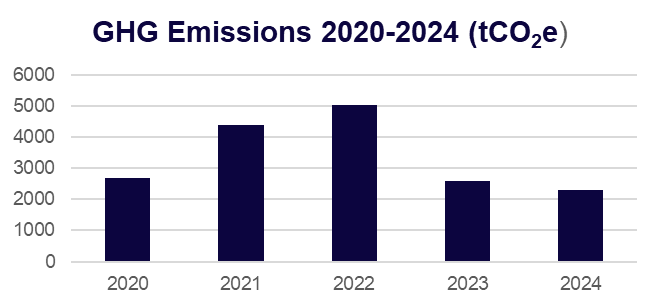
Climecon’s emission calculation is based on the internationally used Greenhouse Gas Protocol, which provides a framework for calculating and offsetting carbon dioxide emissions by companies and cities. In 2020-2022, emissions have been calculated in many respects in euros, which is a secondary way for companies to report the amount of materials and products purchased from the value chain. The calculations have been based on more accurate, mass-based data collected from our value chain in the previous two years. Total emissions decreased by 10 percent in 2024 compared to 2023.
Reducing emissions requires systematic work
Reducing emissions does not happen by itself, but requires systematic work. “If we want to succeed in achieving the sustainable development goals, sustainability must be a cross-sectional theme in business operations. This means that we must look at the range of means through several solutions,” comments Sustainability Specialist Emma Piha. At Climecon, for example, we have significantly reduced energy consumption, switched the purchased energy to renewable, and reduced the amount of mixed waste we generate. In addition, several smaller measures have been taken that have contributed to reducing the carbon footprint.
Carbon intensity tells us relative emissions
A better business year almost automatically means more emissions, and vice versa. This is why it is essential to compare the absolute carbon footprint with the so-called carbon intensity, i.e., by dividing emissions per million in turnover or production volume. When carbon intensity remains on a downward trend, we are on the right track. Our emissions relative to turnover have decreased by 8% compared to the previous year.
SBTi guides our climate work
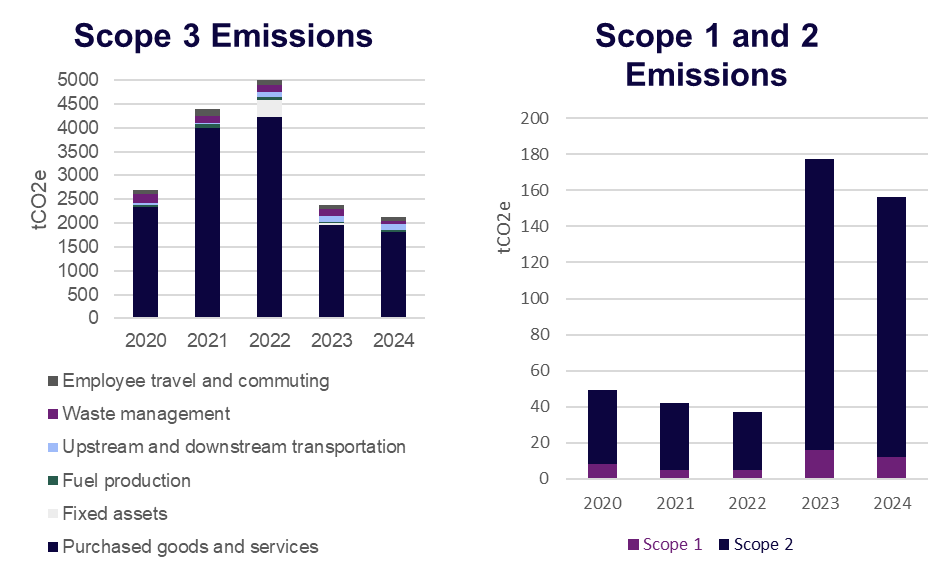
Last year, we joined the Science Based Targets initiative and committed to emission reduction targets to mitigate climate change. In line with the commitment, we will reduce all of the company’s direct emissions (Scope 1) and emissions from purchased energy production (Scope 2) by 42% by 2030 compared to 2023. Scope 1 includes, for example, direct emissions from our own energy production and from properties and vehicles owned and managed by the company. Scope 2 includes indirect emissions related to purchased energy, i.e., emissions from the production of electricity, heat, and cooling. All of Climecon’s electricity is renewable, which has a significant impact on Scope 2 emissions. In addition, we switched to renewable district heating, which will reduce Scope 2 emissions next year.
Scope 1 emissions have decreased by 25% and Scope 2 emissions by 10%, which means that we are on the right track. We have also pledged to reduce emissions from the value chain by 30% by 2030 compared to 2023. Last year, Scope 3 emissions decreased by 10%. Emissions from product and service procurement decreased significantly in 2023 and again in 2024. The reduction from 2023 is 8%. The second largest emission category is waste management. We have taken measures to reduce emissions from waste management, such as increasing recycling and reducing waste materials. Emissions from waste management have decreased by 53%.