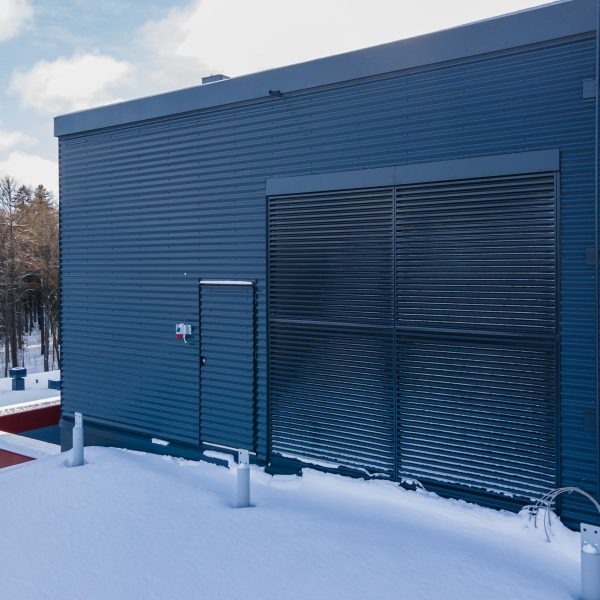
Based on the test results, snow separation works best when the intake face velocity is below 0.7 m/s. At this face velocity, snow ingress through the louvre and into the fresh air chamber was minimal. The results highlight the importance of correctly sizing the air intake to ensure effective snow separation and the operational reliability of the entire ventilation system.

Test 6: standard snow and wind speed 0 m/s. Face velocity 0.7 m/s.
Why is snow separation important?
In northern climates, fine snow particles can enter ventilation systems, causing wet filters, increased pressure drop, and higher maintenance requirements. These issues can compromise system performance and increase operating costs.
For this reason, snow separation should be considered already during the air intake design phase. In addition to the snow and rain cover, the placement of air intake openings, the fresh air chamber, water drainage, and de-icing solutions all have a significant impact on the end result.
Recommendations for reliable air intake design
Based on Eurofins testing and practical experience, the following measures are recommended:
- Keeping the air intake face velocity below 0.7 m/s
- Careful placement of air intake openings, taking local wind and snow conditions into account
- Using a fresh air chamber positioned behind snow and rain cover
- A heated and drained fresh air chamber floor to manage meltwater
- Automatic de-icing heating controlled by a snow and ice sensor in locations where uninterrupted air intake operation must be ensured under all conditions
Ensuring reliable ventilation in critical facilities
In data centers, hospitals, and other critical facilities, ventilation must operate reliably all year round. A correctly sized air intake solution, effective snow separation, and functional de-icing and drainage solutions reduce the risk of disruptions and support the system’s long-term operational reliability, even in demanding winter conditions.
In addition to snow separation, the water separation efficiency of TUISKU louvres has also been tested by Eurofins. According to the results, the water separation efficiency remains 100% at face velocities of up to 2.0 m/s.
Want to learn more?
Get in touch with our experts.