Vent.X tips – Effect of temperature on the throw pattern

In many cases, the purpose of the supply air is to either cool or heat the room. Cooling with supply air can be considered common in many spaces. Heating, on the other hand, is most typical in different types of high spaces, such as sports facilities, shopping centers or industrial halls.

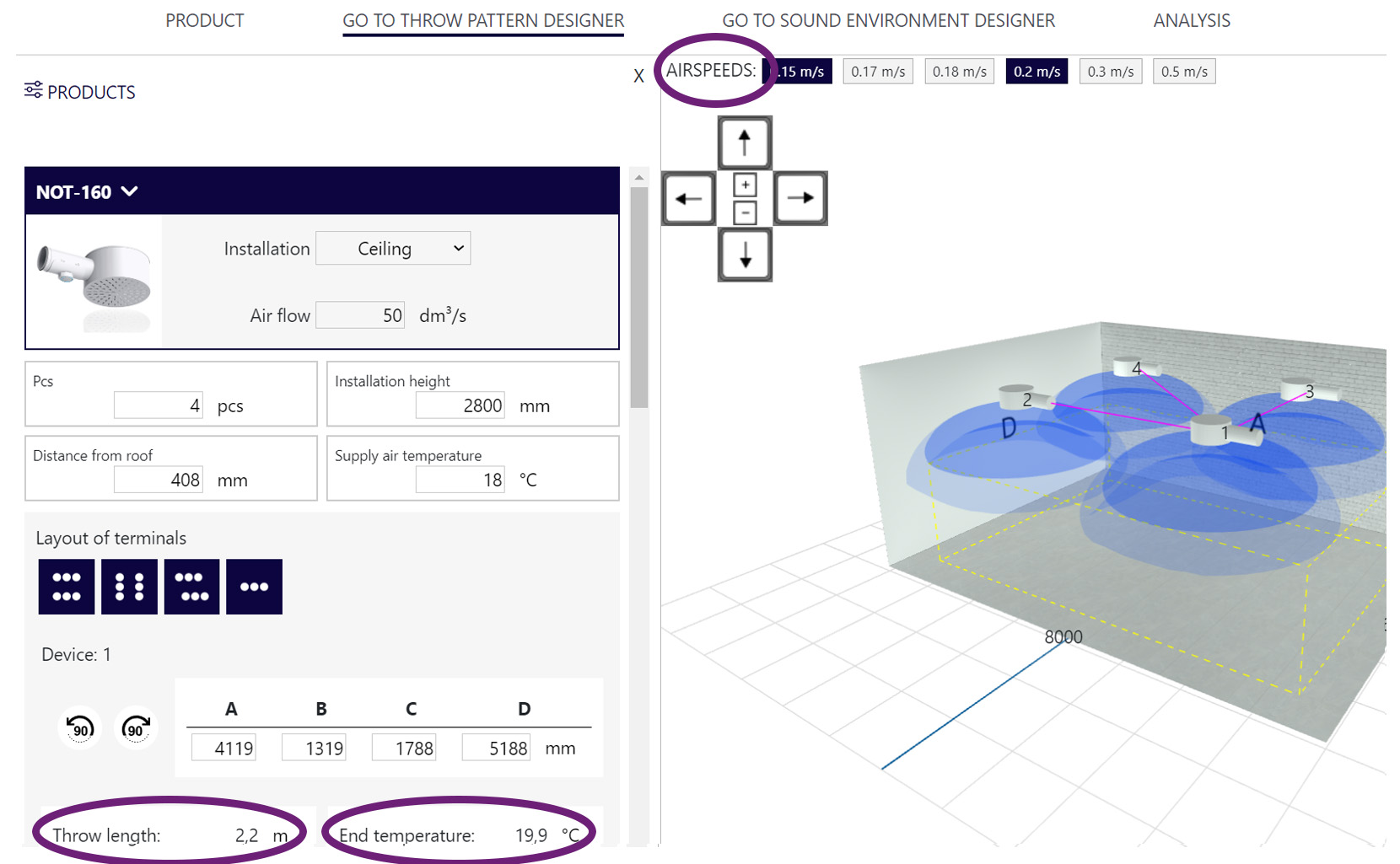
The default temperature value in the Vent.X program is 21 °C for both room space and supply air. You can easily change these values ​​in the Vent.X selection program. Changing the temperature at the throw pattern designer is a particularly necessary feature when analysing the functionality of the ventilation and the spread of the airflow in a cooling or heating situation.

With the help of Vent.X, the HVAC designer can make sure that the throw pattern of the supply air reaches the living area in the heating situation or that there are no draft problems in the cooling situation.

The Vent.X program also indicates the throw length and final temperature of the airflow at the lowest selected airspeed.
News

We have published our 2025 Sustainability Report

Climecon has published its 2025 Sustainability Report, providing an overview of the company’s key achievements and development initiatives in environmental responsibility, social responsibility, and good governance. During the year, we made significant progress in our climate work.

Read more

More performance without compromise – The advantages of nozzle ducts in HVAC design

Nozzle ducts have established themselves in ventilation design as a solution that combines efficiency, occupant comfort, and an appearance appreciated by architects. From an HVAC designer’s perspective, their key strength lies in their ability to simultaneously solve several air distribution challenges: handling large air volumes, draught-free ventilation, low noise levels, and space-efficient implementation.

Read more

Concrete actions towards a 1.5°C future

Climecon’s climate work is built on measurable actions, verified data, and determined progress toward the Science Based Targets initiative (SBTi). We drive emission reductions systematically—grounded in facts, measuring impact, and continuously improving over the long term. The 2025 carbon footprint calculation shows that our work is delivering results, particularly where the impact is fastest and most significant.

Read more