Disadvantages of inaccurate adjustment
If devices with inaccurate measurement accuracy are used within the ventilation system, device-specific errors will withstand all devices in the ductwork. In the worst-case scenario which is common when air volumes and velocities are low, the supply air left for the last devices in the duct might be significantly lower than required.
Ventilation responds to changing circumstances as well as building pressure ratios. Re-adjusting the devices takes time and is expensive, without a guarantee of the air volumes remaining as planned.
High airflow measurement accuracy guarantees controlled air distribution
One option is to seek a solution for balancing the ventilation system with precisely adjustable air terminal devices. This way less excess control units are needed in the ductwork. For this, air terminal devices with a wide adjustment range and a high airflow measurement accuracy offer a suitable alternative.
Our range includes devices with a significantly high airflow measurement accuracy meaning that their air volumes remain at ±5% of the designed level. The adjustment position is secured in place with a reliable SlideFix locking mechanism. As a result, even during installation and maintenance, the airflow rates remain as planned.
ISY measures pressure difference over the control section
A large pressure difference is required for accurate measurement. For this reason, our devices are designed so that the device-specific pressure difference is greatest when measured over the control section. The patented ISY control mechanism measures static pressure difference across the control unit instead of between the plenum box and the room.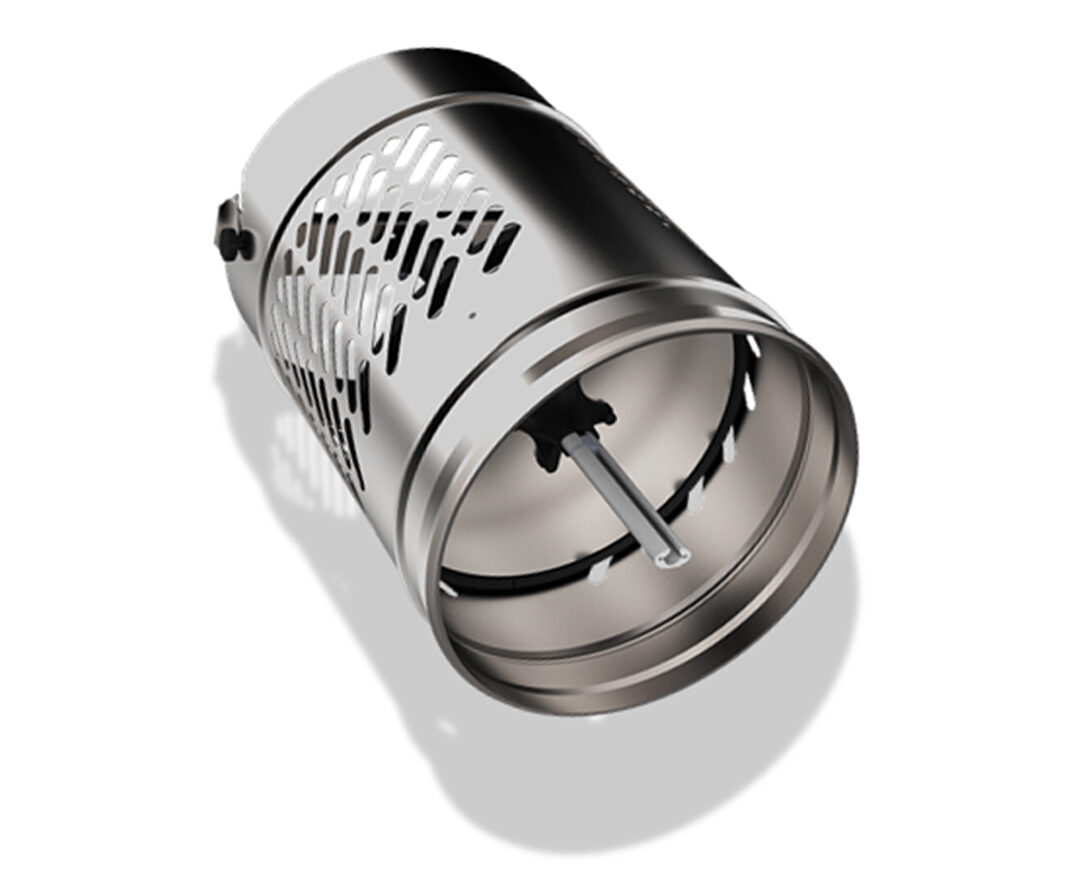
The high pressure difference of air terminal devices increases the authority of the terminal devices within the ventilation system. This reduces reactivity to changes in the building-wide pressure differences. Air volumes will remain at the planned level even if conditions vary.
Preadjusting simplifies and saves time
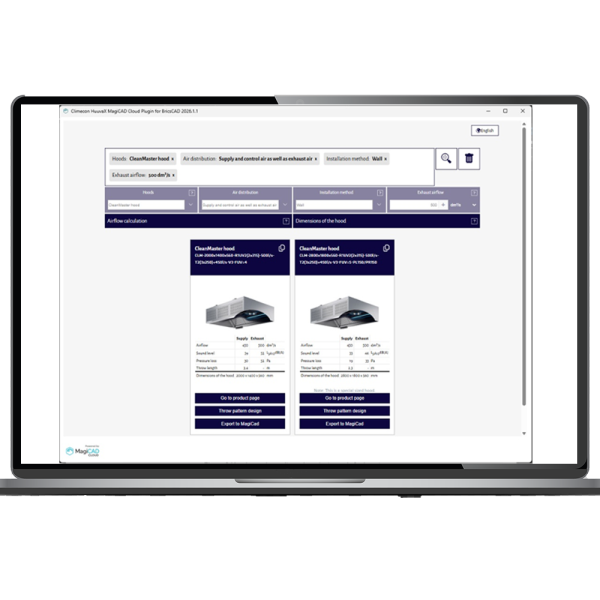
Precise and pre-adjusted devices significantly speed up and simplify the adjustment process of ventilation devices and ensure that the equipment performs according to the planned air and sound properties. Preset values are obtained directly from the MagiCAD, and Revit models. In this way, ventilation designers can ensure that the selected devices operate within the correct airflow and sound range.